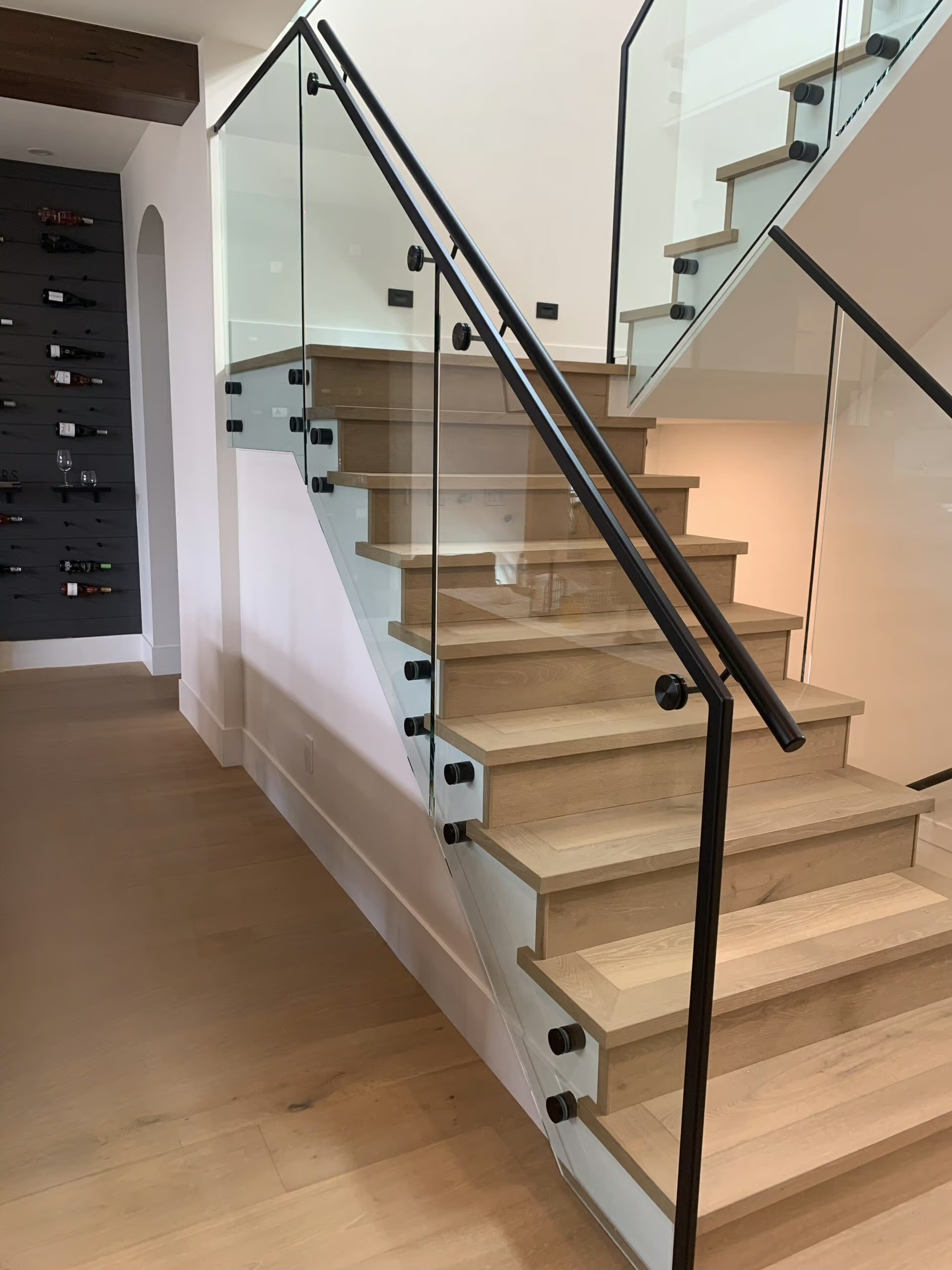
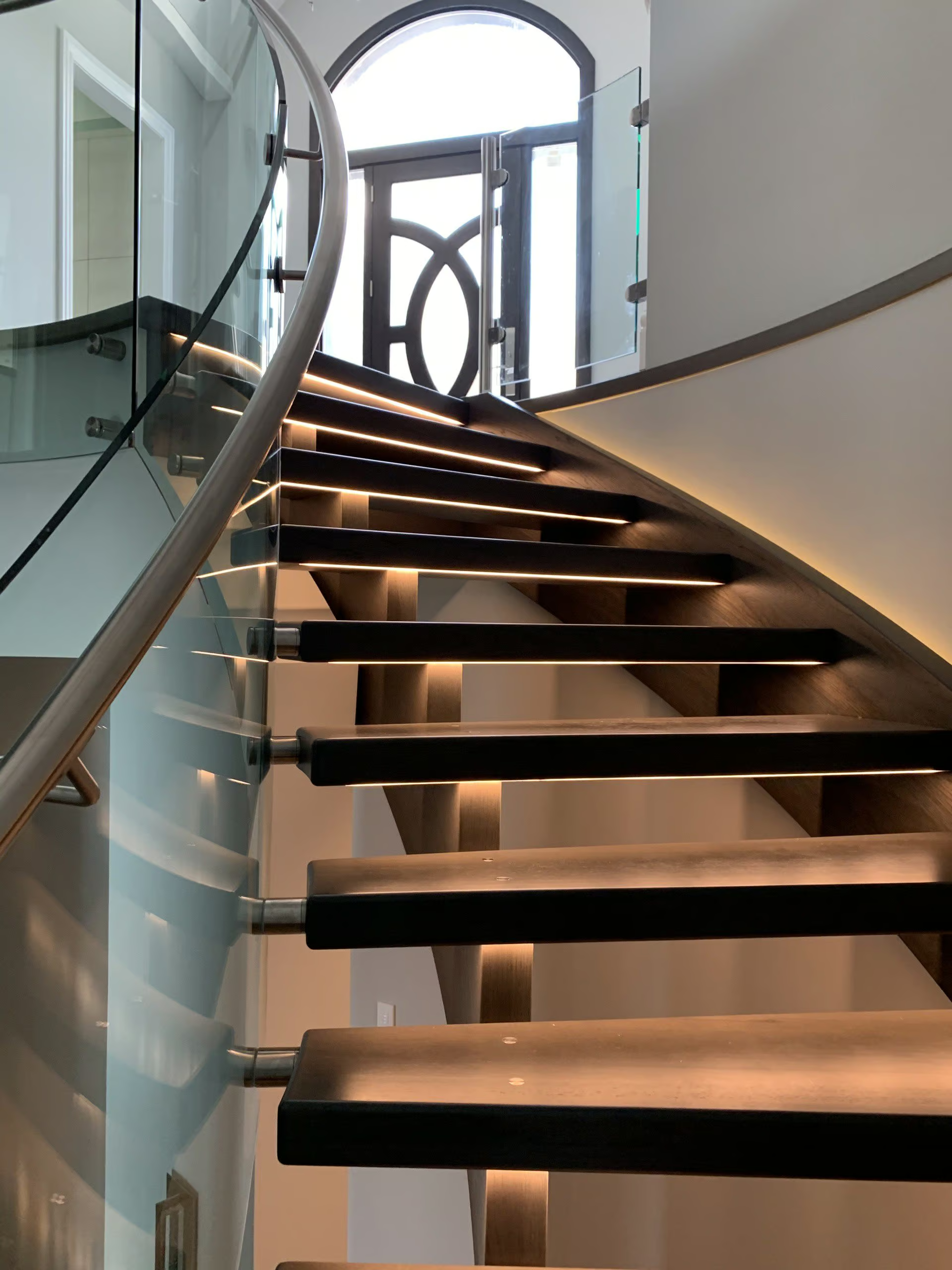
How to choose exterior stairs and railings that stand up to BC weather—not just installation day
Choosing the right exterior stair and railing materials is the difference between a system that lasts decades and one you’re rebuilding in five years. Every exterior staircase in the Okanagan fights the same battle: freeze-thaw cycles that heave and crack, UV exposure that fades and dries out wood, and moisture that finds its way into every joint if you let it.
Here’s how to choose exterior stairs and railings that are actually built for this climate — not just built to look good on installation day.
Why Exterior Is a Different Problem Than Interior
Interior stairs and railings are chosen mostly on look, feel, and floor plan. Exterior systems must survive the environment first and look good second. In BC, that means engineering around three things at once: standing moisture from rain and snowmelt, direct UV exposure through long summer days, and repeated freeze-thaw cycling through the shoulder seasons. Any one of these will shorten the life of the wrong material. Together, they’re why an exterior build needs a different material and engineering conversation than an interior one.
Exterior Stair Materials: What Actually Lasts
Exterior stair performance comes down to two decisions: what the stringers (the structural frame) are made of and what the treads (the walking surface) are made of. Here’s how the three common configurations compare:
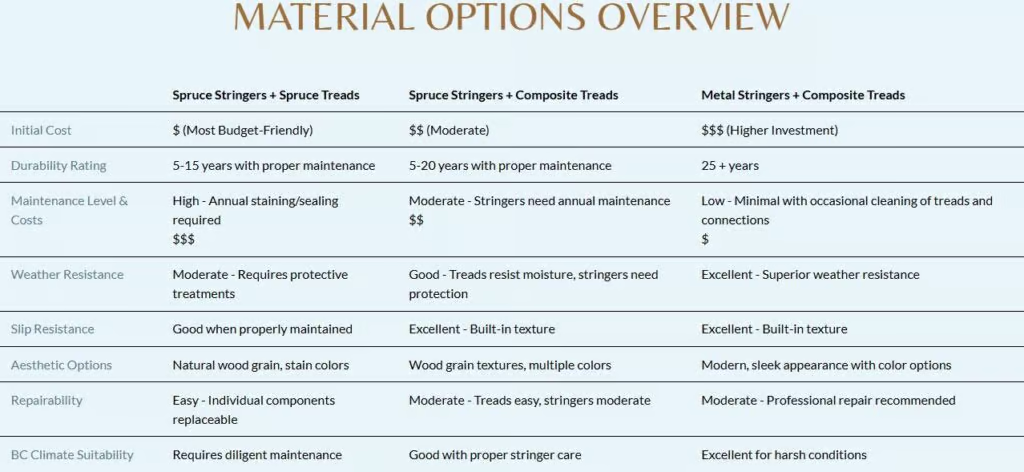
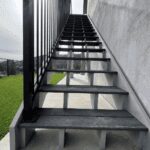
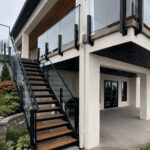
1-All-wood systems are the lowest upfront cost, but they’re also the most exposed—spruce needs regular sealing and inspection to hold its 5–15-year lifespan, and skipping a season of maintenance shows up fast.
2-Swapping to composite treads extends the walking surface’s life and cuts down on sanding, staining, and replacing split boards, while keeping the stringer cost low.
3-Metal stringers paired with composite treads are the long-term play: powder-coated aluminum or steel doesn’t rot, warp, or need refinishing, and it carries the rest of the system for 25+ years with minimal upkeep.
There’s no universally “right” answer here—it’s a real trade-off between upfront budget and long-term maintenance. A rental property or a short-hold flip might reasonably choose spruce-on-spruce. A forever home or a commercial entrance almost always pencils out better with metal stringers over a 20-year horizon.
Exterior Railings: Matching Materials to the Same Conditions
Railings face the same exposure as stairs, and the material decision follows similar logic:
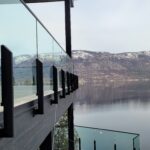
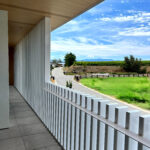
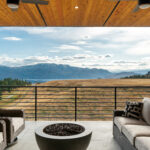
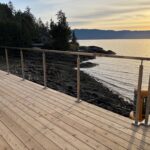
• Glass railings (6 mm or 12 mm tempered panels) hold up well outdoors when properly engineered, and they keep sightlines open—a common choice for view lots and decks. They need occasional cleaning but no refinishing.
• Powder-coated aluminum resists rust and doesn’t need repainting, and it’s available in black, bronze, white, or custom colors to match the rest of the exterior.
• Black metal and cable infill systems offer a lower-maintenance alternative to wood spindles, with a cleaner sightline for modern builds.
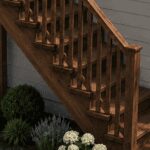
• Wood railings can absolutely work outdoors, but they carry the same maintenance considerations as wood stair components—expect regular sealing to protect the finish.
The most common mistake here isn’t picking a bad material—it’s mismatching the stair and railing systems, so one component is rated for 25 years and the other needs attention every second season. Coordinating both at once avoids that gap.
Engineering and Code: The Part You Don’t See
Material selection only matters if the system underneath it is engineered correctly. The BC Building Code sets specific requirements for exterior stairs and railings, including:
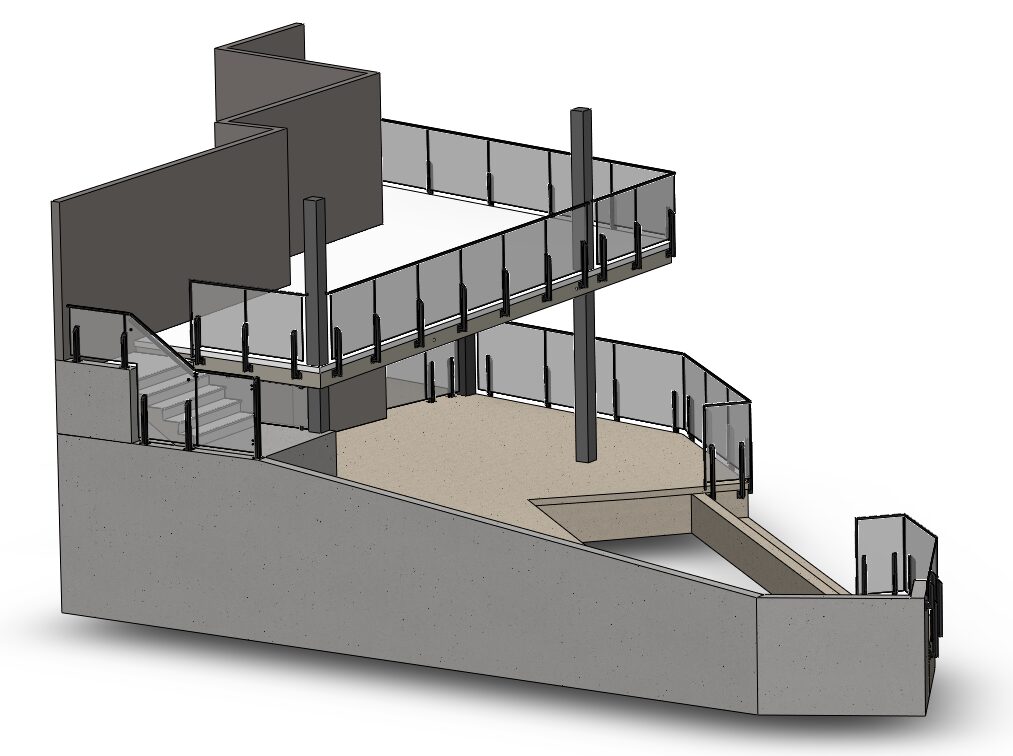
- Rise-to-run ratios—the relationship between step height and depth, which affects both comfort and code compliance
- Handrail height and grasp ability requirements
- Guard height and spindle spacing for railings, particularly on elevated decks
This is where precision fabrication matters as much as material choice. CNC-cut stringers hold their measurements exactly, which means the rise-to-run ratio and connection points are correct on the first install—not adjusted on site after the fact.
Common Mistakes to Avoid
- Choosing on price alone. The cheapest option today is often the most expensive option over a 15-year ownership period once maintenance and replacement are factored in.
- Ignoring freeze-thaw at the base. Improper footings or drainage around stairs is one of the most common causes of early failure, regardless of the material above ground.
- Mismatching stair and railing lifespans. A premium metal stair paired with an untreated wood railing means you’re maintaining half the system every year.
- Skipping the code review. Rise-to-run and handrail specs aren’t optional, and retrofitting a non-compliant exterior stair after inspection is more expensive than building it right the first time.
Exterior Stair and Railing Materials, Built for This Climate
Trueline builds every exterior stair and railing system specifically for BC’s conditions—moisture, UV, and freeze-thaw included—using CNC precision fabrication backed by decades of hands-on experience.
Whether you’re a builder specifying stairs for a multi-family project or a homeowner replacing a deck staircase, we coordinate stairs and railings as one system, not two separate vendors, so the materials, timelines, and code compliance line up from the first measurement to the final install.
Measured, built, and installed with precision. Ready to choose the right exterior stair and railing materials for your project? Request a quote or view our project gallery or visit our Kelowna showroom to talk through your exterior stair and railing project.